You still rank first. The answer above you doesn't mention it.
Google now writes the answer before the results begin. Sagentel tracks which of your queries carry an AI Overview, whether you are cited inside it, and what that does to the clicks you used to count on.




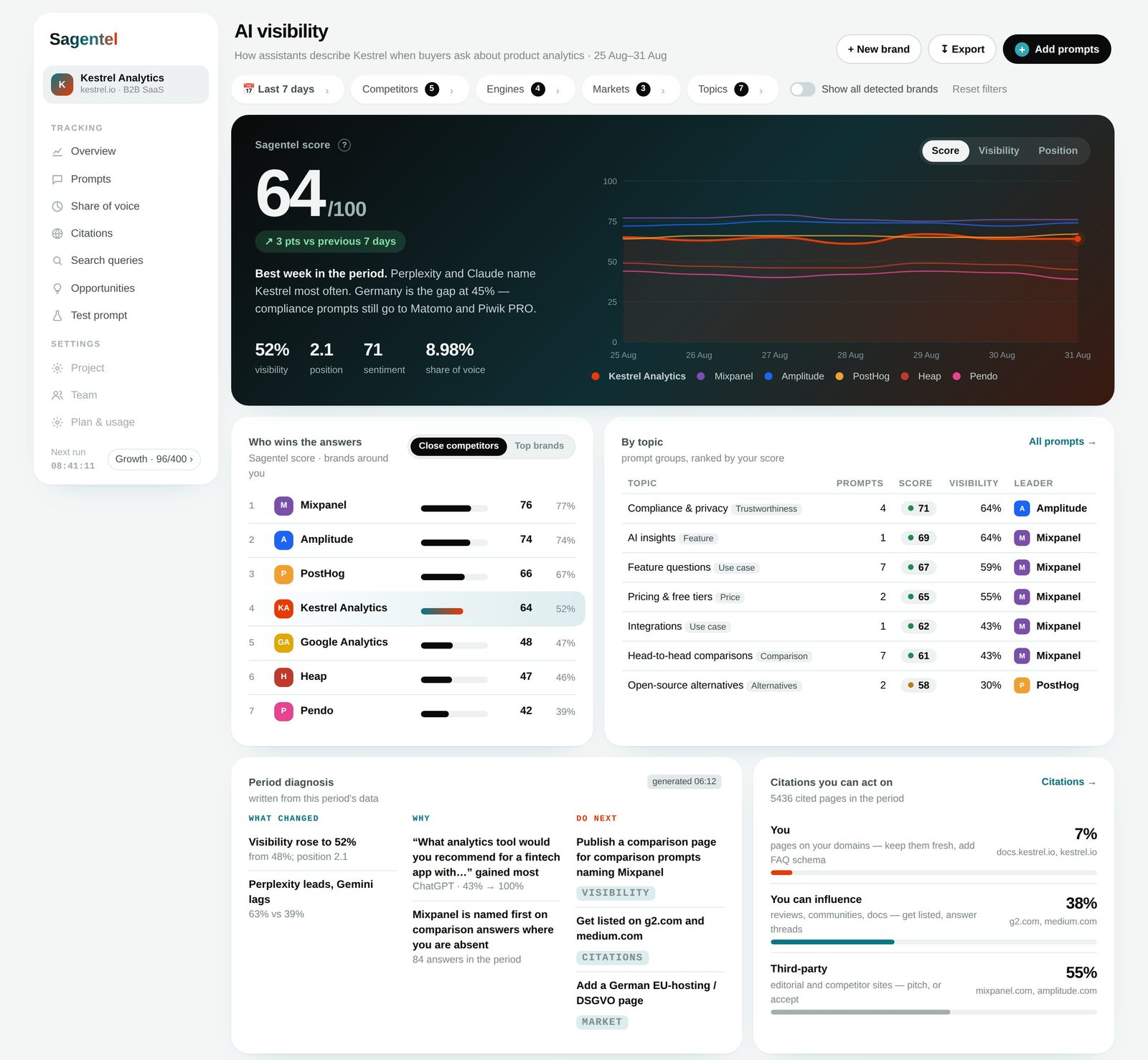
Position is no longer the whole story on Google
Rank trackers still report a number that used to predict traffic. These four readings explain the gap that has opened between the two.
What gets a page into the answer, not just under it
Being cited is a different competition from ranking, run on the same index. Four things separate the pages Google quotes from the ones it merely lists.
Built for the people who own the number
Which paragraph to rewrite, which fact to add, which follow-up to cover - derived from the answer that currently excludes you.
Query-level evidence you can put in a monthly report when rankings held and sessions did not.
Questions we get asked
Isn't this just rank tracking with extra steps?
No, because the two now disagree. A page can hold position one and lose a third of its clicks to an answer that credits somebody else. We track the answer as its own surface: does it appear, who is cited, and what happened to your clicks on that query.
Which queries do you monitor?
Start with the queries you already rank for and care about commercially - those are where an answer does the most damage. We then add the question-shaped variants that only exist in AI Mode and never showed up in your keyword reports.
Do AI answers appear for everyone the same way?
No. Presence varies by market, device and query type, and it changes as Google expands coverage. We record per market and per device rather than reporting one blended figure, because a rollout in one country can distort the average badly.
Can we opt out of being used in AI answers?
Only by giving up visibility you probably want. Blocking directives that remove you from answers tend to remove you from the surrounding results too. In practice the workable strategy is to be the cited source rather than the invisible one.
Does being cited recover the click?
Partly, and not always. Some questions are fully answered on the page and no click follows. Citation still carries value - it is the only brand presence left on that query, and it precedes the searches where a click does happen.
What does the first month look like?
Run one classifies your tracked queries into answered-and-cited, answered-without-you, and untouched, then matches each group against your click trend. You end with a shortlist of pages where a specific rewrite is likely to win the citation back.
Rankings held. Clicks didn't.
One domain, your existing query set, first results the same day - answer coverage, citation share, and the pages worth rewriting first.